Weighing the options: Bariatric surgery vs. weight loss medication
April 15, 2026Categories: Weight Loss Care

Overview: Deciding to try weight loss medication or potentially having bariatric surgery can be daunting, so it’s important to evaluate all the options before making a decision that’s right for you.
Losing weight can be a frustrating journey. Perhaps you’ve followed your primary care provider’s advice to eat a healthy diet and exercise at least 150 minutes a week, but there’s no significant change on the scale. Your next step in your weight loss journey may be researching non-surgical weight loss or surgical weight loss options, and there are many things to consider.
Non-surgical weight loss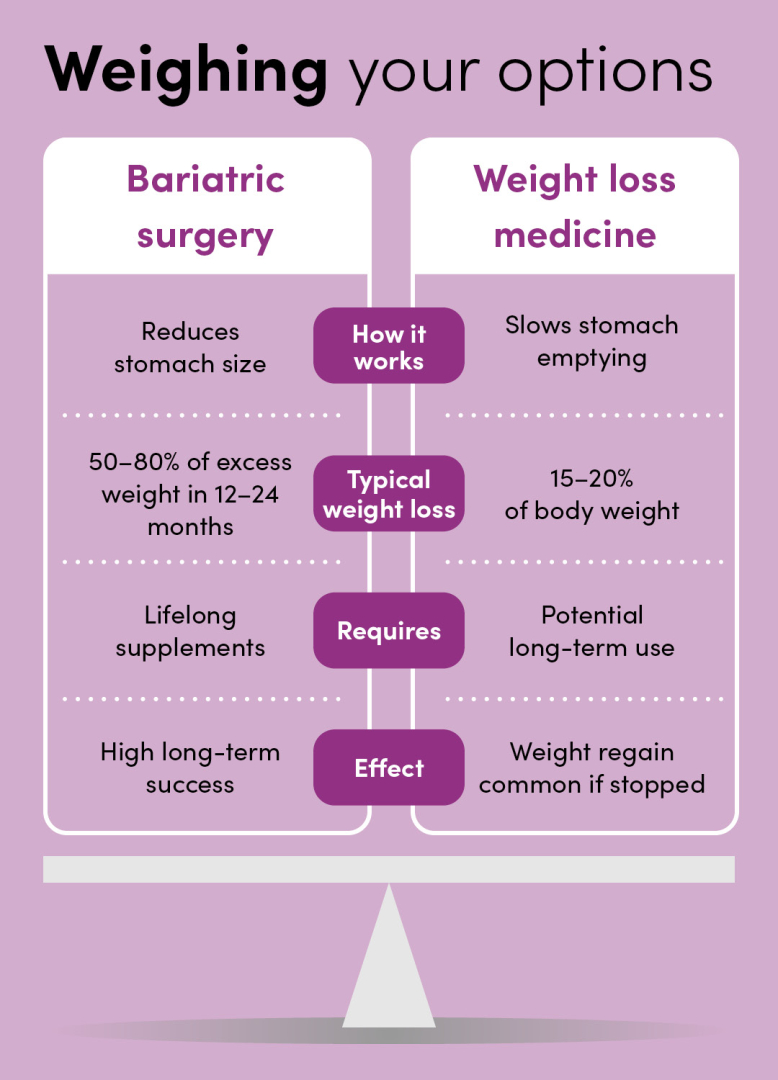
Since 2021, many GLP-1 medications have been FDA-approved, such as Zepbound and Wegovy both in shot and pill form. You may know someone who's had great success on a GLP-1 for weight loss, and you’re wondering if it’s right for you? Your first step will be to discuss options with your primary care provider and see if you qualify for a GLP-1 for weight loss. Depending on your insurance, the main qualifying factors include:
- A body mass index (BMI) of 30 or higher
- A BMI of 27 or higher with other health conditions that affect your weight, including Type 2 diabetes or prediabetes, obstructive sleep apnea, fatty liver, high blood pressure, high cholesterol or cardiovascular disease
- Guidelines may differ based on your insurance, so it’s best to have a conversation with your doctor first about coverage
Considerations for non-medical weight loss
- Insurance coverage for medication and out-of-pocket cost
- Potential GLP-1 side effects from medication, including constipation, diarrhea, nausea, stomach pain and vomiting, pancreatitis, small bowel obstruction, vision loss and gall bladder issues
- There are more options than just GLP-1s, so it’s best to discuss what’s best for you with your doctor
It’s vital to be open and honest with your doctor about the reasons you’re considering weight loss medication. Talk about the concerns you have related to your weight, such as heart disease or diabetes. In turn, your doctor will review your medical history, run labs, and review all your current health conditions and medications.
After careful review, your doctor may say you’re a good candidate to try drugs for weight loss. However, it’s important to understand that medication isn’t a substitute for a healthy lifestyle; it’s a supplement. Studies show that these drugs are highly effective for weight loss and diabetes management with nearly 85% of users achieving greater than 5% weight loss. However, long-term success can be hindered if you stop taking medication. When prescribed and monitored by a health professional, GLP-1 weight loss drugs are generally very safe and effective.
If GLP –1 medication isn’t affordable or well-tolerated for you, there are other less expensive options available.
Surgical weight loss options
Deciding to have any type of elective surgery can be overwhelming. However, bariatric surgery is safe and effective for maintaining long-term weight loss for those who qualify. A good place to start is taking the Bariatric Surgery Health Risk Assessment.
What are the qualifications for bariatric surgery?
- A BMI of 40 or greater
- A BMI of 35 or greater with certain medical problems, such as heart disease, diabetes, arthritis, high blood pressure and/or sleep apnea
What is bariatric surgery?
Bariatric surgery is the term for surgical procedures for weight loss. The most widely performed surgical procedure for weight loss is gastric bypass. This procedure works in several ways, restricting portion size, altering metabolism and reducing the absorption of nutrients from food. Gastric sleeve is another approach to surgical weight loss. It also restricts portion size and changes metabolism, but it doesn’t alter small bowel anatomy. Both surgical procedures are performed using the Da Vinci surgical robot with small laparoscopic incisions.
Bariatric surgery is proven to be a safe, effective and lasting treatment for severe obesity. Studies show bariatric surgery has a high long-term success rate, with many patients maintaining 50–75% excess weight loss for years after surgery. These procedures improve or resolve diseases including type 2 diabetes, obstructive sleep apnea, heart disease and high blood pressure. The risk of death from obesity, diabetes and heart disease exceeds the risk of surgery.
Want more information? Download our bariatric surgery guide
Considerations for bariatric surgery
If you’re a candidate for weight loss surgery, your primary care provider may refer you to a bariatric surgeon, but a referral isn’t necessary to pursue surgery with our program.
- You’ll need to find out if your insurance provider covers the surgery. However, if you qualify for weight loss surgery, most insurance plans cover a portion of it.
- Self-pay cost after insurance.
Our team at MercyOne will help you navigate conversations with your insurance provider.
Finally, with any surgical procedure, there are risks involved. Immediate complications may include:
- Infection
- Blood clots
- Leaks from surgical staple lines
- Bleeding
Long-term complications may include:
- Nutritional deficiencies
- Gallstones
- Hernias
- Rapid gastric emptying causing nausea, vomiting, dizziness and diarrhea
Complications from bariatric surgery aren’t common, but it’s important to know the risks.
We are here to support you
Keep in mind that costs for medications and requirements are often driven by insurance, so it’s important to discuss all of your options with your doctor. Whether your primary care provider prescribes weight loss medication or refers you to a bariatric surgeon, our team at MercyOne is here to support you every step of the way. Talk to your primary care provider about your options for a successful weight loss journey.
Have more questions? Consult with a weight loss expert!
This blog was medically reviewed by a MercyOne Provider